Luquos Energy Launches the First Sulfur-Based Flow Battery Demonstration Project
Luquos Energy Launches the First Sulfur-Based Flow Battery Demonstration Project
On July 29, the first demonstration project of a charging station with integrated energy storage using a sulfur-based flow battery, a collaboration between Hong Kong China Gas subsidiary Towngas Smart Energy and Luquos Energy, officially started grid-connected operation. At the same time, Luquos Energy officially launched the LEAPLUG sulfur-based flow battery energy storage system, which is also the first sulfur-based flow battery system used for the demonstration project.
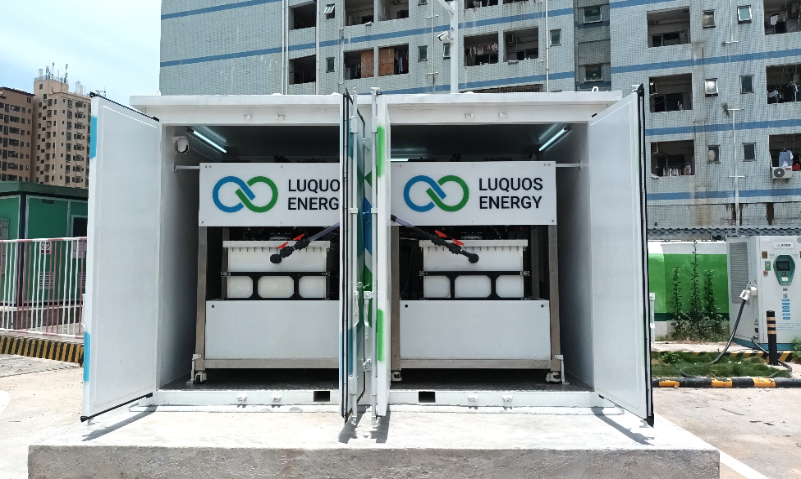
Charging Station with Storage Demo Project
The demo project is located at the Shajing EV charging station in Shenzhen, with a capacity of 20kWh, enough to provide stable power to thirty charging piles in the station. By using a peak-valley electricity price arbitrage strategy, the project is expected to save up to 70% on electricity costs during peak hours. This not only effectively reduces the load on the grid, but also significantly cuts operating costs for the station.
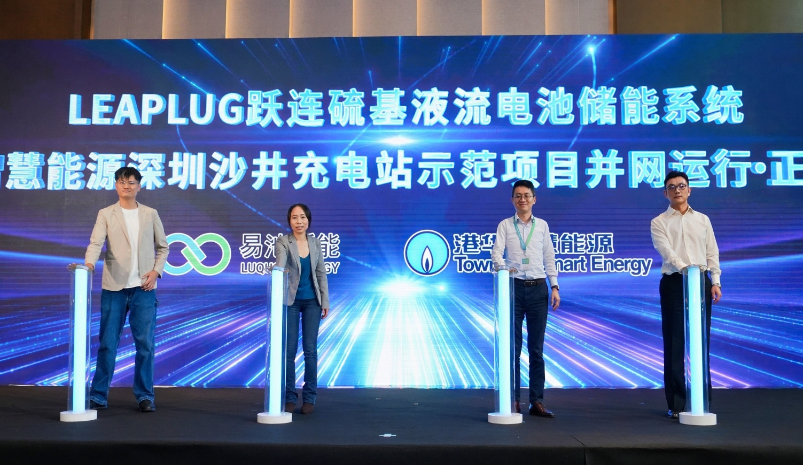
Launch Ceremony of the Charging Station with Energy Storage Demo Project
Empowering application scenarios, speeding up the commercialization of flow batteries
Under the dual carbon goals, by 2030, China plans to increase the share of non-fossil energy in primary energy consumption to about 25%. Among them, safe and low-cost long-duration energy storage technology plays a crucial role in absorbing unstable renewable energy.
At the press conference, Chen Yinglong, Executive Director and Chief Investment Officer of The Hong Kong and China Gas Company, said in his speech that as an outstanding project of the first TERA-Award competition, Luquos Energy’s sulfur-based flow battery technology is high-performing, low-cost, and safe. To help Luquos Energy’s technology quickly take off, in addition to strategic investment, the Gas Company is opening up application scenarios, helping them further verify the technology’s efficiency, cost-effectiveness, and reliability in real-world settings. The official grid connection and operation of this storage demonstration project not only reflects the team’s years of tireless effort but also marks an important step forward for the technology’s industrial application. As an important partner of Luquos Energy, The Hong Kong and China Gas Company will continue to provide full support as always.
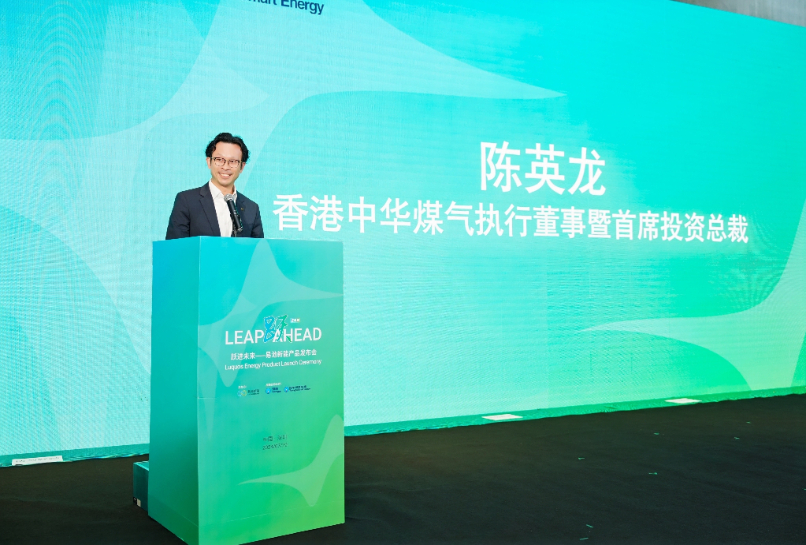
Claude Chan, Executive Director and Chief Investment Officer of The Hong Kong and China Gas Company
Professor Lu Yijun, Chairman and Chief Scientist of Yichi New Energy, said that under the dual carbon goals, the rapid growth of wind and solar power installations presents huge challenges for grid stability. Yichi New Energy is committed to safely and economically storing global wind and solar resources without worry. The grid connection of this demonstration project marks that Yichi New Energy’s sulfur-based flow battery technology has successfully completed pilot-scale technical verification and is now moving quickly toward industrialization. Yichi New Energy plans to achieve large-scale production of this technology by 2027, aiming to further develop the flow battery storage industry and contribute intelligence and effort toward reaching the dual carbon goals.
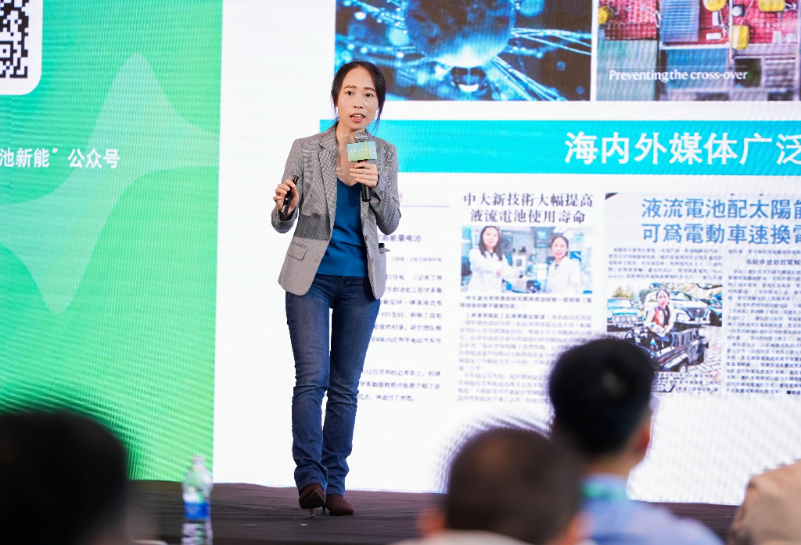
Lu Yijun, Chairman of the Board and Chief Scientist at Yichi New Energy
Among the many electrochemical energy storage technologies, flow batteries are considered a highly competitive solution for long-duration energy storage because of their unique features like high safety and decoupling of energy and power. However, in the past few decades, no practical-scale sulfur-based flow batteries have ever appeared on the market. Their development faces two major challenges: the selectivity of the membrane and the energy efficiency of the battery.
“We developed a charge-enhanced ion-selective membrane (CRIS membrane). Compared to commercial ion-selective membranes on the market, the CRIS membrane can significantly suppress sulfur crossover, extending battery life from dozens of cycles to thousands of cycles without any performance degradation. To tackle the problem of low energy efficiency, we were inspired by the energy conversion mechanisms in living organisms and innovatively added molecular catalysts to the electrolyte. These act like ‘couriers’ for electrons, effectively boosting energy efficiency by over 20%,” said Professor Lu Yijun.
LEAPLUG LeapLink Energy Storage System, ushering in a new era of flow batteries
At the press conference, Dr. Wang Zengyue, CEO of Yichi New Energy, gave a detailed introduction to the LEAPLUG sulfur-based flow battery energy storage system. The system consists of a set of sulfur-based flow batteries and an energy conversion system, based on the team’s research results published in Nature Energy in 2021 and 2023. Its installed cost and full-life-cycle cost per kilowatt-hour are both less than 50% of lithium batteries, and its lifespan is expected to exceed 15 years, showing significant cost efficiency advantages.
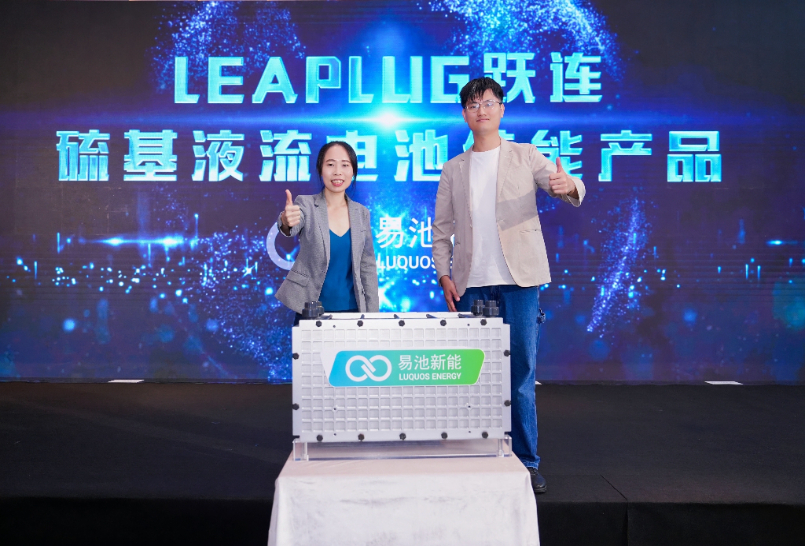
LEAPLUG LeapLink Sulfur-Based Flow Battery Energy Storage System Officially Unveiled
In recent years, lithium-ion batteries have made up as much as 95% of the energy storage market, but their frequent fires and explosions have made the safety of storage systems a big concern for both users and government regulators. At the same time, traditional vanadium flow battery technology is limited in widespread use because it’s expensive due to the use of vanadium as a raw material, and its electrolyte is highly acidic and toxic.
Wang Zengyue introduced, “The LEAPLUG energy storage system uses sulfur as the active material, offering the dual advantages of low cost and high capacity. Compared to traditional vanadium flow batteries, the LEAPLUG system significantly reduces the cost of the electrolyte, is non-toxic, and environmentally friendly. At the same time, this system uses the newly developed CRIS membrane, which greatly improves energy efficiency and lifespan. For long-duration energy storage applications that require large battery capacity in the future, this system is expected to surpass current electrochemical storage options on the market, including lithium batteries, not only in safety but also in cost-effectiveness.”
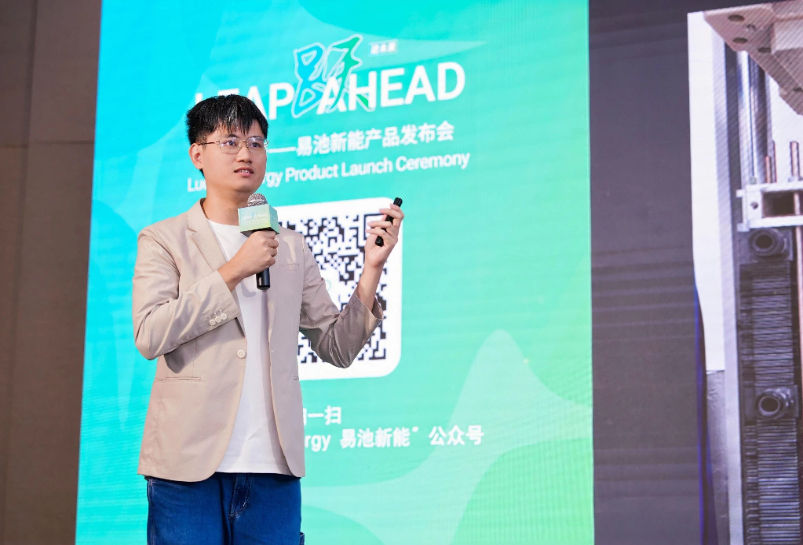
Yi Chi Xin Neng CEO Wang Zengyue
In 2020, Professor Lu Yijun from the Chinese University of Hong Kong and her PhD team founded Yichi New Energy, focusing on developing new sulfur-based flow battery technology and aiming to create inherently safe and low-cost energy storage batteries. The team has over ten years of R&D experience in key materials like ion exchange membranes, electrolytes, and catalysts. The sulfur-based flow batteries developed by Yichi New Energy have an electrolyte cost that’s only 1/20 of vanadium flow batteries, and their capacity cost is significantly lower compared to vanadium flow batteries and lithium batteries, making them perfect for long-duration energy storage applications of over 4 hours.
Yichi New Energy won the Bronze Award in the first TERA-Award competition, received strategic investment from China Gas, and gained support for application scenarios. In the future, TERA-Award will continue to support the development and technology implementation of zero-carbon tech startups, contributing more to fighting climate change and protecting our planet.